Resources

Connecting a farm
Will Bowden, a fifth-generation farmer in Tasmania, leveraged irrigation and digital tools to remotely control 17 pivots, pumps, and reservoirs, reducing downtime and improving water management.
Case Studies
Name
Rob and Eliza Tole, 'Greenvale'
Location
Cressy
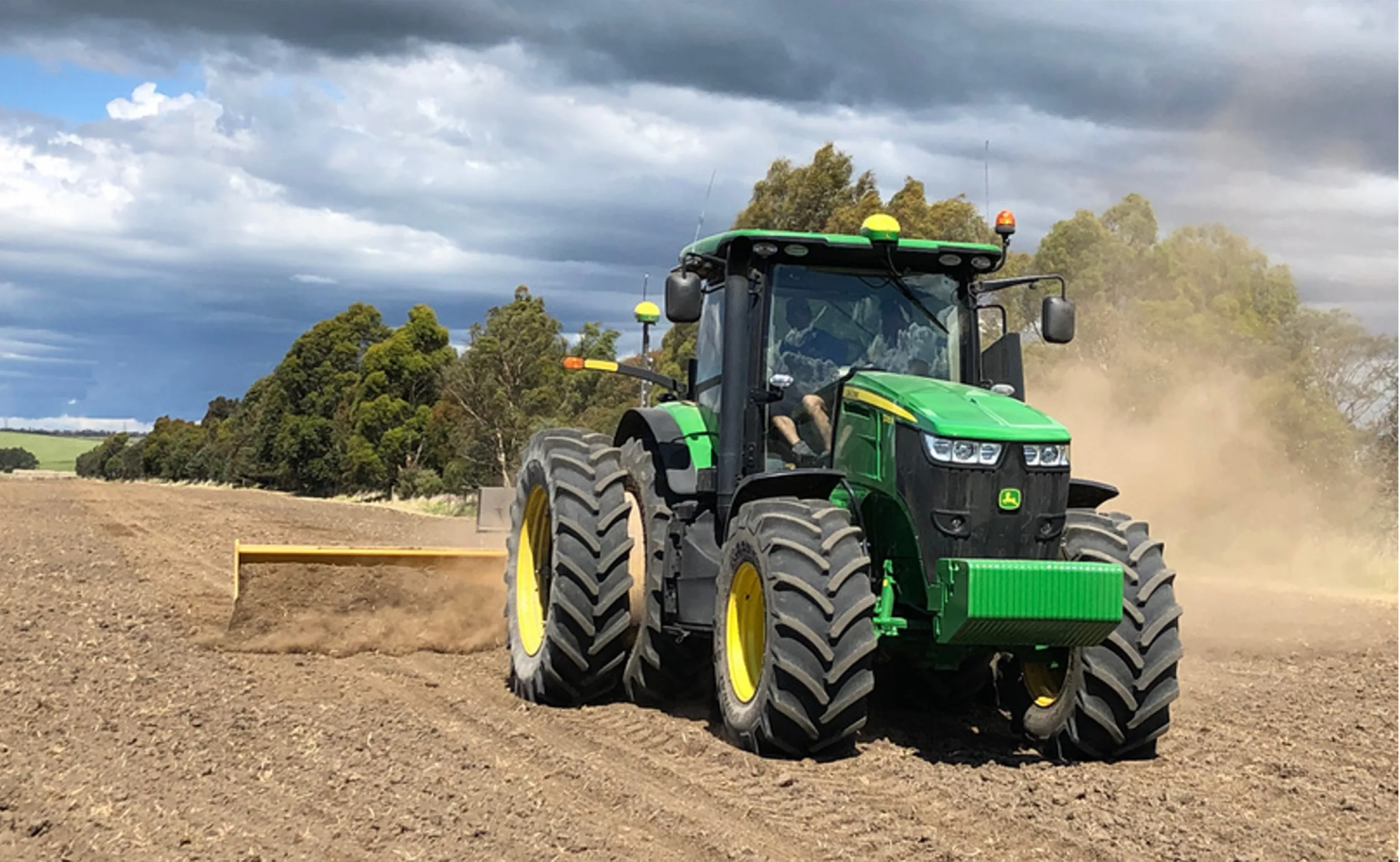
Rob and Eliza Tole manage ‘Greenvale,’ a 555-hectare irrigated cropping and livestock farm in Cressy, Tasmania, with diverse soils and crops including peas, poppies, grass seed, clover, beans and pasture, alongside significant sheep production. Over two decades they have adopted a range of agtech solutions — from GPS guidance and soil mapping to VRI, land forming, and drainage — to address soil variability, harvest losses, and irrigation inefficiency.
*This project was delivered by the Tasmanian Agricultural Productivity Group (TAPG) and supported through funding from the Strategic Industry partnership Program (SIPP).
Improved drainage and surface uniformity reduced harvest losses and protected equipment.
Grid mapping enabled more targeted fertiliser use, improving efficiency.
Spatially-controlled land forming eliminated many water challenges and inspired Rob to launch a drainage contracting business.
Over time, the top priorities became mapping, drainage, irrigation and GPS guidance as the foundation of farm productivity.
Conversely, drone photography for NDVI images and VRI were less convenient and less impactful for Greenvale's context, although the drone has been useful for remote observation and livestock inspections.
If starting from scratch today, Rob would invest first in EM38 and topography mapping to identify irrigation and drain management zones, then undertake land forming and subsurface drainage as required.