
Improving input efficiency

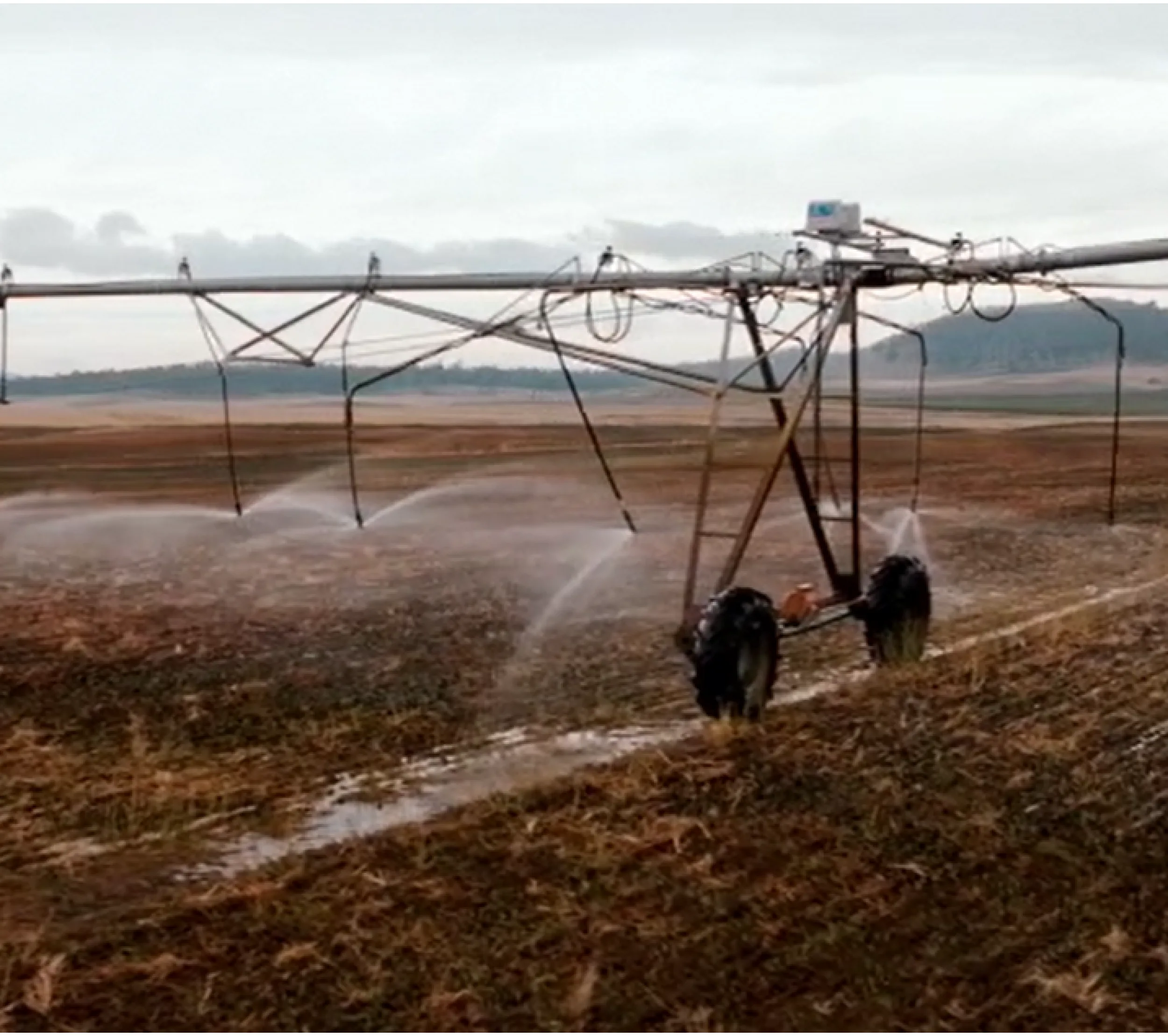
What is the problem?
Farmers' margins are being squeezed from both sides by ongoing price negotiations with buyers and rising input costs that cut into your bottom line. At the same time, farmers face increasing pressure from industry and the market to reduce chemical and fertiliser use.
Why is it important?
Managing your input use efficiently helps protect you from future price increases, building a more resilient and profitable business. Lowering your farm's inputs can also have postive impacts on your GHG emissions footprint and soil health, which are critical to the long-term sustainability of your operations, and the wider industry.
What does success look like?
Manage your cost of production in ways that deliver a positive return on investment and work for you, as well as the environment. Prioritise solutions that work across a variety of crops, given most crop farmers need to rotate crop types.
Encompassed technologies
Smart precision sprayer
- Targets spraying to reduce pesticide and fertiliser usage
- Positions nozzles close to the ground to minimise pesticide drift and waste

WEED-IT
WEED-IT delivers optical spot spraying by detecting chlorophyll in actively growing weeds and targeting them precisely. This reduces herbicide and water use by up to 95% compared to blanket spraying.
Estimated Cost
AUD 235,000 for a large WEED-IT sprayer

Ecorobotix - ARA Field Sprayer
Uses AI and Innovative-resolution cameras to detect individual weeds or target zones in real time.
Applies precise micro-doses of spray only where needed via a fast-moving robotic boom.
Estimated Cost
"≈ AUD 460,000
for a complete unit"
Smart precision sprayer
- Turns individual sections on and off at predefined locations in the field
- Improves soil health by avoiding over-application
- Cuts input costs while maintaining yield

John Deere Section Control
• John Deere Section Control applies precise amounts of fertiliser, seed, and crop protection products by automatically turning sections on and off based on GPS location — reducing overlap, skips, and input waste.
Estimated Cost
"≈ AUD 3,060
per activation / software license"
Laser weeding
- Eliminates chemical use for weed control
- Leaves soil microbiology undisturbed by replacing chemical herbicides with precision laser technology

Carbon Robotics
• Carbon Robotics offers chemical-free, no-till weed control for specialty crops using computer vision and laser modules.
• The LaserWeeder eliminates over 100,000 weeds per hour, reducing the need for herbicides and manual weeding.
Estimated Cost
N/A (quote required)
Drone technologies
- Maps and applies inputs precisely in hard-to-reach areas
- Reduces overlap and chemical waste through targeted aerial application
- Turns individual spray sections on and off at predefined locations
- Improves soil health by avoiding over-application
Ag Drones Tasmania
• Certified aerial service provider using DJI Agras drones for precision spraying and spreading across Tasmanian farms.
• Treatment of steep, wet, or hazardous terrain—delivering input only where needed to reduce chemical waste and environmental impact.
• Offers optional aerial mapping services as a supplementary feature.
Estimated Cost
N/A (quote required)
Spectral Drones
• Drone-based precision spraying and crop mapping service.
Targets weeds and pasture stress zones with variable-rate spray, reducing chemical use.
• Also offers multispectral imagery for crop health and variability monitoring.
Estimated Cost
N/A (quote required)

Taz Drone Solutions
• Custom drone services for precision spraying in hard-to-reach or hazardous areas, including dam walls and steep terrain. Uses smart targeting to minimise chemical waste and environmental impact. Also offers aerial mapping and imaging.
Estimated Cost
N/A (quote required)
On-farm fertiliser production systems
- Enables farmers to produce fertiliser locally, reducing dependency on external supply chains and volatile input costs.
- Cuts emissions from fertiliser manufacturing and transport while supporting more circular, regenerative nutrient use.

Green lightning
On-farm unit producing ~132 Kl / 70 tonnes nitrogen/urea fertiliser per year from air using pyrolysis. Costs approx. Running costs ~ 3c/L using electricity / $0 if solar powered.
Estimated Cost
~130 k per unit.
ROI estimate: 13.2% (1-3 years whilst paying off machine), 1733% once unit paid off.
Crop Yield and Fertiliser Mapping
- Monitors crop yield to evaluate management practices
- Identifies areas of low productivity for targeted improvement
- Supports better decision-making for input allocation

Ag Leader – Spatial Management System
SMS software is a decision-making tool that integrates various data such as GPS field mapping and yield monitoring and analyses trends to generate decision insights for farmers.
Estimated Cost
"SMS Basic: ~ AUD 1,130
SMS Advanced: ~ AUD 3,000
Annual support / maintenance: ~ AUD 1,165"
Crop Yield and Fertiliser Mapping
- Identifies soil nutrient needs for optimised fertiliser usage
- Reduces waste by applying fertiliser only where needed
i4M
i4M delivers precision ag hardware and support services across Australia. Their rate controllers and GPS-enabled systems allow growers to implement variable-rate fertiliser and seeding in real time. They also provide local support for Ag Leader software tools used in mapping and decision support.
Estimated Cost
N/A (quote required)

Precision Ag
Offers a wide range of services including soil and yield mapping, variable rate nutrient planning, satellite imagery, and moisture monitoring. Their team supports growers in collecting, analysing, and acting on field data to improve input efficiency and crop performance.
Estimated Cost
AUD 20 – 50 / hectare (or AUD 2,000 – 15,000+ for small to medium farm service contracts)