
Measuring and monitoring your environment
What is the problem?
Farmers are facing increasing expectations from buyers and regulators to provide verified emissions data and demonstrate sustainable on-farm practices.
Australia’s national targets (43% by 2030, net zero by 2050) and the Safeguard Mechanism reforms mean your operations will likely come under greater scrutiny.
Financial institutions and insurers are beginning to factor emissions risk into lending and underwriting decisions for farms.
Why is it important?
Under growing expectations to reduce greenhouse gas (GHG) emissions from livestock, soils, and energy use, measuring and monitoring emissions accurately becomes critical. This process can be time-consuming, complex, and tools aren't always tailored to smaller, family-run operations.
Without clear data, you may also miss out on sustainability credentials, carbon market opportunities, access to premium buyers and international markets, and a true picture of your farm’s environmental performance.
What does success look like?
Online tools help you to collect emissions data and use it to develop an emissions baseline. That baseline emissions data then guides your decisions on efficient herd management, soils, and energy use. You can benchmark whole-farm emissions and identify key hotspots and opportunities for emissions reduction. This verified emissions data will help you to build trust with buyers and regulators and could enable you to participate in carbon markets. Importantly, consider data integration and privacy concerns when selecting the right system for you.
Encompassed technologies
Whole-of-farm carbon footprint calculators
- Benchmarks emissions across the entire farm operation
- Tracks progress toward emissions reduction goals
- Identifies mitigation hotspots across inputs, machinery, livestock, and land use
- Simplifies compliance with sustainability frameworks and reporting requirements
- Builds credibility with supply chain partners and sustainability-conscious buyers

Quick Start Carbon Calculator
• A fast-entry tool that estimates emissions and carbon stored through planting; ideal for initial engagement and comparison before deeper analysis
• Developed by MLA to be a simple antry point for any mixed or broadacre producer.
Estimated Cost
Free

Farm Carbon Calculator
• A farmer‑founded platform offering emissions and sequestration estimations. Built for simplicity and benchmarking, freely accessible for individual farmers
Estimated Cost
Free

FarmPrint
• A cradle‑to‑gate footprint tool aligned with international reporting standards (IPCC), covering farm‑level emissions (including embedded emissions in inputs like fertilizers and diesel).
•Integrates via API with other farm software to reduce manual data entry
Estimated Cost
N/A / quote required (beta)
Sector-specific calculators
- Calculates GHG emissions for specific industries using standardised methods
- Provides emissions breakdowns across key enterprise components (e.g., herd, feed, energy)
- Enables benchmarking against historical performance or industry baselines
- Supports compliance with industry frameworks or sustainability reporting

Greenhouse Accounting Framework tools via PICCC
• Developed by the Australian Government and hosted by the Primary Industries Climate Challenges Centre (PICCC), this resource provides access to sector-specific emissions calculators
• These tools are based on the National Greenhouse Gas Inventory methods and support accurate and consistent accounting across Australian agricultural industries.
Estimated Cost
Free
Carbon insetting and decision-support tools
Ruminati
• A standardized, farmer-facing calculator for commodity or whole-farm footprints.
• After establishing a baseline, the platform presents options to reduce emissions through changes in practices, feed, or herd management
Estimated Cost
N/A (quote required)
Forestry-based offset estimation tools
- Estimates how tree planting or existing vegetation can offset on-farm emissions
- Supports basic planning toward carbon neutrality using forestry-based strategies

Carbon Footprint Estimator
• Simple online tool for Tasmanian producers to estimate their farm’s carbon footprint and assess how tree planting or existing vegetation can offset emissions.
• Helps identify how forestry practices can contribute to on-farm carbon neutrality.
Estimated Cost
Free
Digital emissions recordkeeping platforms
- Digitises and centralises farm or business-level emissions data
- Produces audit-ready carbon reports aligned with national and global standards (e.g., GHG Protocol, ASRS, ERF)
- Supports compliance, sustainability claims, and participation in carbon markets
- Enables supplier engagement and traceability across the value chain

Sumday
Integrates with accounting systems (e.g. Xero) to map financial data to emissions sources
Generates automated emissions reports aligned to the GHG Protocol
Includes training resources and tools to help teams build in-house carbon accounting skills
Estimated Cost
N/A (quote required)

Enviro Capture
Cloud-based platform offering emissions dashboards, reporting, and optimisation tools.
Built for agriculture with features to support ASRS and ERF reporting.
Suitable for producers already tracking carbon footprints and needing structured documentation.
Estimated Cost
N/A (quote required)
Blockchain Traceability Tools
- Links sustainability and emissions data to products via secure digital ledgers
- Enables tamper-proof, transparent supply chain claims
- Supports product-level traceability and consumer trust

OpenSC
Blockchain system linking emissions and sustainability data to products.
Enables transparent, QR-based consumer access to verified sustainability credentials.
Piloted in beef, seafood, and timber sectors.
Estimated Cost
N/A (quote required)
Livestock GHG sensors - wearables/boluses
- Enables real-time tracking of methane emissions per animal
- Supports selective breeding and feed strategies to reduce herd emissions
- Helps quantify emissions for reporting and low-carbon market access

ZELP Sense
Smart halter that captures and neutralises methane as it's exhaled by cattle, while also measuring emissions data.
Mitigation function is still in early trials; real-time monitoring is already active and supports low-emission herd management.
Estimated Cost
N/A (quote required)
Livestock emissions calculator
- Estimates livestock emissions from feed, manure, and herd structure
- Benchmarks emissions using standardised national methodologies
- Provides data for compliance and sustainability reporting
MLA Carbon Calculator
Online calculator developed by Meat & Livestock Australia for beef and sheep producers.
Allows users to input farm data and estimate emissions and carbon storage from vegetation and soil.
Estimated Cost
Free

Dairy Australia Carbon Calculator
Simple, spreadsheet-based tool for dairy farmers to calculate and track emissions at the farm level.
Breaks down emissions by feed, herd, manure, and energy use.
Estimated Cost
Free
Livestock GHG sensors - stationary devices
- Estimates methane emissions per animal using gas sensors paired with ID or weight data
- Identifies Innovative emitters for breeding, feeding, or carbon reporting purposes
- Enables herd-level emissions insights without wearables or lab testing
Greenfeed (C-Lock inc.)
Measures raw GHG data fluxes from individual animals. It is possible to estimate herd GHG averages. The system offers a small amount of pelleted bait to entice the animals to visit multiple times per day. The gas emissions data is logged then processed allowing the user to easily access a summarized report of calculated fluxes. *note flux data will require interpretation - there is currently a device at the TIA Elliot Smart Farm if you'd like to see one in action*
Estimated Cost
N/A (quote required)

Agscent
Stationary, paddock-based methane sensing device that measures exhaled gases as animals interact with it (e.g. at water or feeding points).
Uses animal ID and optional integration with walk-over weighers for real-time, per-animal methane estimation.
Estimated Cost
N/A (quote required)
Feed-based methane mitigation tools
- Studies indicate enteric methane emissions reduction through feed-based interventions
- Supports compliance with carbon schemes or sustainability commitments
- Can support low-carbon branding for red meat and dairy products

DIT AgTech
Delivers methane-reducing additives through livestock drinking water, ideal for remote grazing.
Includes real-time dosing and data capture to support carbon credit generation and compliance.
Estimated Cost
N/A / quote (project basis)
Environmental accounting - natural capital
- Provides property-level measurement and valuation of natural assets (soil, vegetation, water, biodiversity)
- Supports biodiversity and environmental market reporting initiatives
- Integrates multiple environmental domains in a single dashboard

AIA Environmental Accounting Platform
Helps producers measure and track the condition of natural capital assets like soil, water, and biodiversity.
Supports ESG reporting and potential participation in environmental markets.
Estimated Cost
Free
Environmental accounting - migration planning
- Guides farmers through on-farm mitigation planning and impact modelling
- Supports development of insetting initiatives tied to supply chain or brand targets
- Evaluates co-benefits such as biodiversity, water use, and soil health
- Helps navigate eligibility for formal carbon programs or environmental markets

TRUII
Brisbane-based technology company that supports data-driven planning and reporting, with a particular focus on the environment, including a Natural Capital accounting suite, and a range of environmental risk projectors. Stay tuned for an agricultural focused carbon and co-benefit calculator tool.
Estimated Cost
N/A (quote required)
Landscape Options and Opportunities for Carbon (LOOC) abatement Calculator
• Quick, free tool to assess carbon project eligibility under Australia's Emissions Reduction Fund.
• Estimates carbon abatement potential for practices like soil carbon or vegetation regeneration.
Estimated Cost
Free
Bioacoustic and fauna sensors
- Offers continuous, non-invasive monitoring of bird or wildlife activity on farms
- Supplies biodiversity presence/absence data for impact assessment and stewardship claims

Chirrup.ai
Deploys acoustic recorders to capture bird and frog calls, transmitting raw sound data for automated species identification (e.g., via AI).
Suitable for wetlands and farm landscapes; helps monitor biodiversity trends and seasonal species presence.
Estimated Cost
N/A (quote required)
Drone and satellite monitoring
- Tracks vegetation cover and structure, detect revegetation or loss over time
- Supports natural capital valuation, carbon sequestration planning, and biodiversity habitat mapping
- Enables periodic baseline assessments and ongoing monitoring across large landscapes

Agronomeye
Using VirtualTAS Lidar scanning and integrated data platform to provide farm scale insights to review, measure and report on your farm's environment, from natural capital andcarbon to water efficiency. Whether you’re earning carbon credits, forecasting for a risk-free, profitable season or proving value to investors.
Estimated Cost
N/A (quote required)

Wildlife Drones
Drone-mounted radio‑tracking and thermal imaging technology tracks tagged wildlife (e.g., native birds, mammals) and captures fauna activity remotely
Estimated Cost
N/A (quote required)

NatureScan
Uses consumer-grade drones (e.g., DJI Mavic 3M multispectral) combined with ecological field measurements and AI to estimate Essential Biodiversity Variables (EBVs) such as vegetation structure and species coverage.
Estimated Cost
N/A (quote required)
Environmental monitoring & data resource platforms
- Improves awareness & understanding of environmental conditions on‑farm
- Supports more informed land use or management decisions

Environer
Free online tool helping farmers, fishers, and foresters explore how to manage natural capital, biodiversity, and carbon for multiple benefits.
Highlights opportunities linked to market access, emissions reduction, and environmental stewardship outcomes.
Estimated Cost
Free
Fixed or in-ground soil sensor
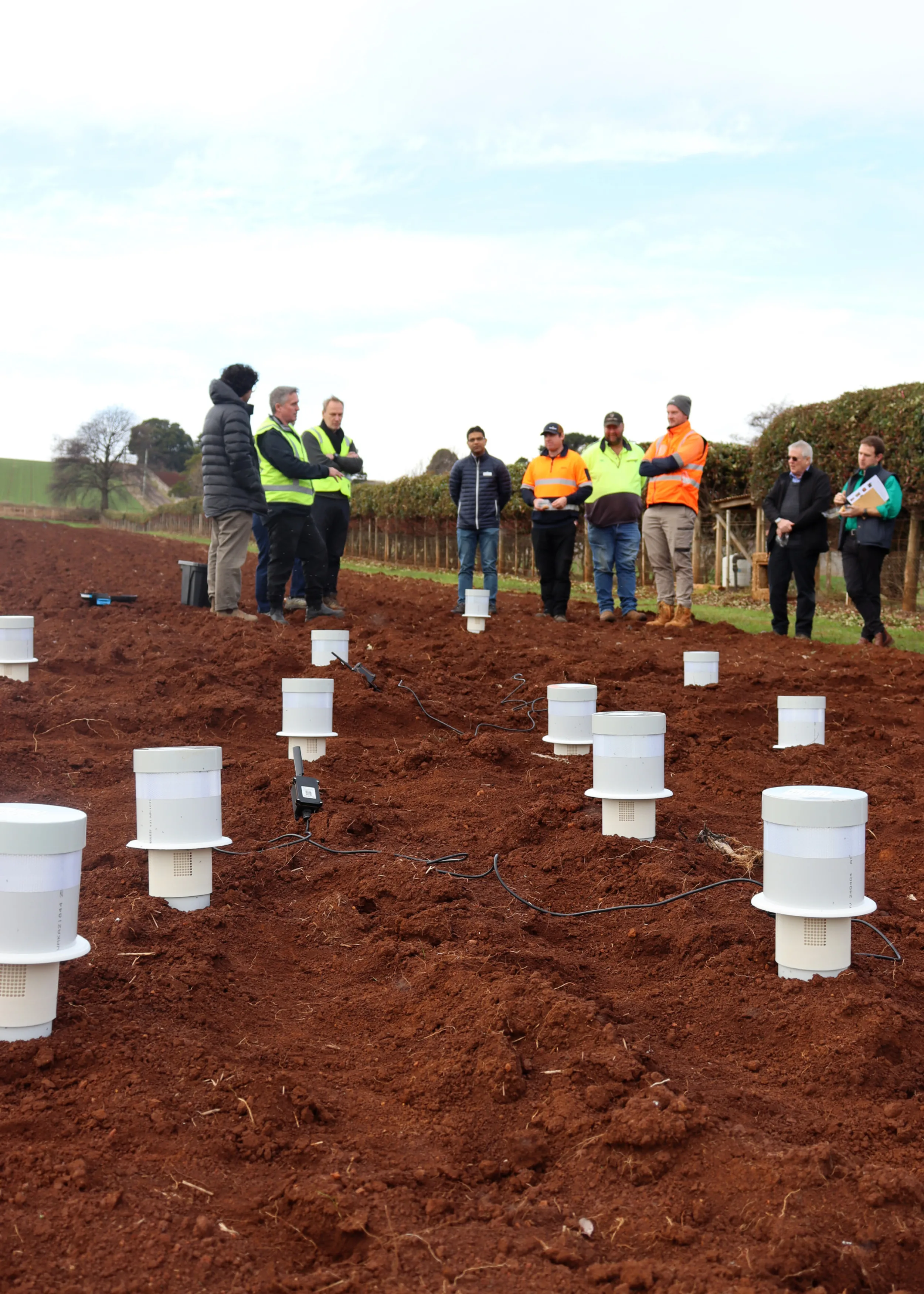
- Provides continuous, real-time soil data at multiple depths
- Supports irrigation and nutrient decisions based on actual soil conditions
- Improves long-term tracking of soil health and moisture patterns
- Verifies carbon sequestration efforts

ResonAg
Multi-depth soil probe providing real-time soil moisture and temperature data
Designed for precision irrigation and decision-making
Data accessible via cloud dashboard; tailored for Australian producers
Estimated Cost
N/A (quote required)

Sentek – Drill & Drop
Measures moisture, salinity, and temperature
Easy to install and bury at any depth
Operates in wide temperature ranges (–20°C to 60°C)
Estimated Cost
≈ AUD 1,500-1,700 for a sensor node

SensoTerra
Wireless, multi-depth sensor measuring moisture at up to 6 points
Integrated with app and exportable data
Includes built-in temperature sensor
Estimated Cost
N/A (quote required)

METER Group – TEROS 12
Rugged sensor with steel needles for Innovative contact accuracy
Cloud-connected logger with visualisation tools
Backed by a 3-year warranty and proven durability
Estimated Cost
≈ AUD 670

EnviroPro
Innovative-end multi-depth probe measuring soil moisture and temperature down to 160 cm
Can assess larger soil volumes using electric field technology
Ideal for long-term monitoring and precision irrigation
Estimated Cost
N/A (quote required)

Brunnings – 3-in-1 Soil Meter
Basic handheld analog tool measuring pH, moisture, and light
Low-cost, no integration
Useful for simple spot checks
Estimated Cost
≈ AUD 18–65
AxisTech – Mini Soil Probe
Measures moisture, temperature, and salinity at multiple depths
Solar-powered, waterproof, and wirelessly transmits data
Suitable for integration with farm platforms
Estimated Cost
N/A (quote required)
Portable soil testing tools
- Enables rapid, in-field soil analysis for nutrients, pH, and moisture
- Reduces turnaround time compared to lab testing
- Supports real-time decisions for fertiliser and irrigation management

Hone Ag
Handheld spectral scanner using visible + NIR spectroscopy.
Captures key soil and grain quality indicators in seconds, with app-connected visualisation and machine-learning calibrated to Australian contexts.
Estimated Cost
N/A (quote required)
ChrysaLabs
Probe uses VisNIR, capacitance, and ATR spectroscopy in-field
Provides real-time nutrient and texture data in under 30 seconds
Connected to app with dashboard visualisation
Estimated Cost
N/A (quote required)

AgSight
AgSight supplies Solvita™ technologies, including tests for Soil Microbial Activity, Labile Organic Nitrogen, Soil Aggregate Stability and Compost Maturity. These simple, fast, low-cost tests measure CO2 and NH3 emissions, revealing hidden soil processes
Estimated Cost
Solutions from Soil respiration test $327.52 AUD - up to $3-6k for soil lab test kits.

Stenon
Handheld NIR tool estimating N, Mg, SOM, SOC, pH, and moisture
Works with field mapping software
Estimated Cost
N/A (quote required)

DOTS
Uses soil porewater extraction and spectroscopy for soil nitrate measurement.
Sends real-time data to cloud AI for nutrient optimisation
Integrates with third-party fertigation systems
Estimated Cost
N/A (quote required)
Physical sample lab testing
- Provides Innovatively accurate soil analysis for nutrients, pH, salinity, and carbon
- Meets requirements for carbon project baselines and certified reports
- Supports benchmarking of in-field sensor results

Nutrien Ag Solutions
Offers soil testing via ASPAC-accredited lab
Combines lab results with agronomist advice
Estimated Cost
N/A (quote required)

Eurofins APAL
Leading ag lab provider in Australia
Results returned within 7 days using farmer-submitted samples
Offers full analysis: NPK&S, salts, pH, trace elements, SOC
Estimated Cost
Typically AUD 50–300+ / sample, depending on test suite
Soil mapping and visualisation
- Visualises soil and biomass variability from sampling and remote sensing.
- Enables precision input planning and variable-rate applications.
- Tracks soil zone changes for long-term management.

DecipherAg
Cloud-based platform visualising soil and biomass layers
Integrates remote sensing with sampling data
Used for zone mapping, decision support, and record-keeping
Estimated Cost
AUD 1,000 / year (for up to 10,000 mapped ha) + AUD 200 / 10,000 ha extra

MyFarm Web - AgriTechovation
Data platform that combines insights from a range of in-field technologies, photography and satellite remote sensing. Offers a range of precision farming services, inclduing soil classification, chemical analysis and microbial life assessments to assess the resilience of your soils and crops.
Estimated Cost
N/A (quote required)

PCT Agcloud
Specialises in Australian soil zone and EM mapping
Supports precision input strategies and integrates with equipment
Helps track soil variability over time
Estimated Cost
N/A (quote required)

Agworld
Farm management platform integrating soil test layers
Supports paddock planning and variable-rate prescription maps
Widely used across Australian cropping and mixed systems
Estimated Cost
~ AUD 1,495 / year for Basic
~ AUD 2,495 / year for Plus
~ AUD 3,995 / year for Pro
Biochar and soil health products
- Enhances soil water retention, nutrient holding capacity, and microbial activity.
- Reduces nutrient loss, run-off, and input requirements
- Builds soil carbon and resilience, supporting regenerative agriculture and long-term productivity.
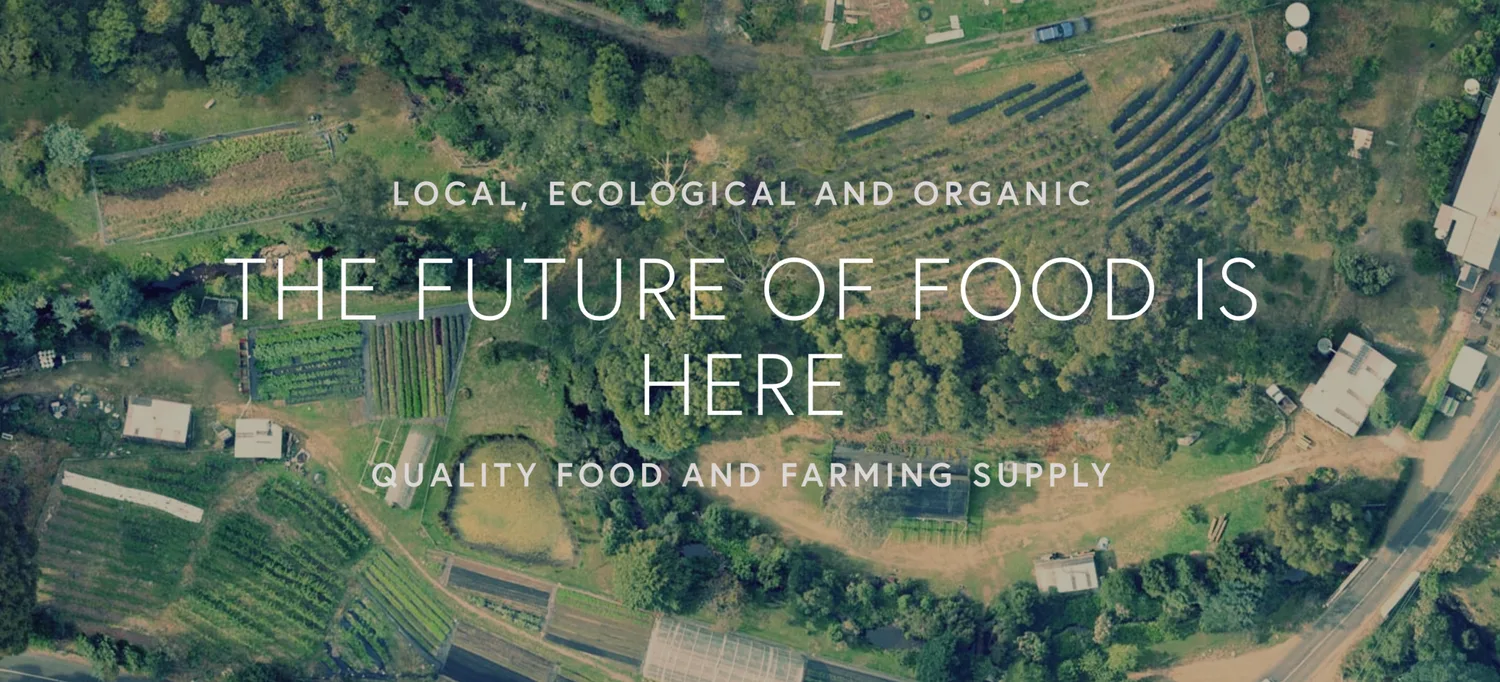
Longley Organic Farm
Tassie based supplier of traditional biochar cone kilns as well as activated and non‑activated biochar
Used to improve soil structure, water retention, microbial life and reduce fertiliser use in cropping, vegetable, fruit, or pasture system
Estimated Cost
AUD 550–700 per 185 L traditional cone kiln

Terra Preta Developments
Tassie based supplier of deep cone biochar kilns—Biochar can improve soil-water retention, nutrient cycling, and carbon storage.
Supports healthier soil systems, reduced runoff, and smarter resource reuse
Estimated Cost
• Retail biochar (small batches): $5.50 – $38.50 AUD depending on volume/type
• Nutrient enriched biochar: $8.00 – $49.50 AUD for small pack sizes